Retatrutide: How the Triple-Agonist Mechanism Actually Works
Pep-Pedia Research Team
Retatrutide is an investigational peptide engineered to activate three separate metabolic hormone receptors — GIP, GLP-1, and glucagon — at once, combining appetite, insulin, and energy-expenditure pathways that earlier single- and dual-agonist peptides addressed only in part.
What Is Retatrutide?
Retatrutide is a synthetic peptide that simultaneously activates three separate metabolic hormone receptors: the glucose-dependent insulinotropic polypeptide (GIP) receptor, the glucagon-like peptide-1 (GLP-1) receptor, and the glucagon receptor. This "triple agonist" design distinguishes it from earlier incretin-based therapies like semaglutide (a GLP-1-only agonist) and tirzepatide (a GIP/GLP-1 dual agonist) — retatrutide adds glucagon-receptor activity on top of the two pathways those molecules already share.
The Three Receptor Pathways, Individually
Each receptor retatrutide engages has a distinct native physiology, and understanding them separately is the key to understanding why a triple agonist was designed at all.
GLP-1 receptor. GLP-1 is released from intestinal L-cells after eating and acts on receptors in the pancreas, stomach, and brain. Pancreatic activation enhances glucose-dependent insulin secretion — meaning it amplifies insulin release only when blood glucose is already elevated, which is part of why GLP-1 agonism carries a relatively low intrinsic risk of hypoglycemia. In the stomach, GLP-1 receptor activation slows gastric emptying, and in the hypothalamus and brainstem it suppresses appetite signaling. This is the best-characterized of the three pathways and the one shared by every approved incretin therapy to date.
GIP receptor. GIP is likewise released from the gut after eating, but its physiology is more complex and was historically considered a weaker, less useful drug target on its own. GIP receptors are expressed on pancreatic beta cells (contributing to insulin secretion), and on adipose tissue, where GIP signaling has been studied for effects on fat cell metabolism and insulin sensitivity. In combination with GLP-1 receptor activation, GIP agonism appears to act synergistically rather than redundantly — a pharmacological interaction that dual-agonist research (including tirzepatide's development) was largely built around.
Glucagon receptor. Glucagon is GLP-1's physiological counterpart: it raises blood glucose by stimulating the liver to break down glycogen and produce new glucose, and it increases energy expenditure by stimulating thermogenesis and lipolysis (fat breakdown). Taken in isolation, glucagon receptor agonism would be undesirable in a metabolic drug — it pushes glucose up. Retatrutide's design bets that pairing glucagon-receptor activity with concurrent GLP-1 and GIP activation offsets the glucose-raising effect while preserving the energy-expenditure benefit, since the other two pathways are simultaneously working to lower glucose and blunt appetite.
Why Combine All Three: The Polyagonist Rationale
The pharmacological logic behind retatrutide (and multi-agonist peptides generally) is that obesity and type 2 diabetes involve several distinct, only partially overlapping hormonal pathways — appetite regulation, insulin secretion, insulin sensitivity, and energy expenditure are not controlled by a single receptor system. A molecule that engages three complementary receptors at calibrated relative potencies is designed to produce a combined effect greater than any single pathway could on its own, while using the receptors' opposing directional effects (GLP-1/GIP lowering glucose, glucagon raising it) to keep the net glucose effect balanced rather than let any one pathway run unchecked.
Molecular Design
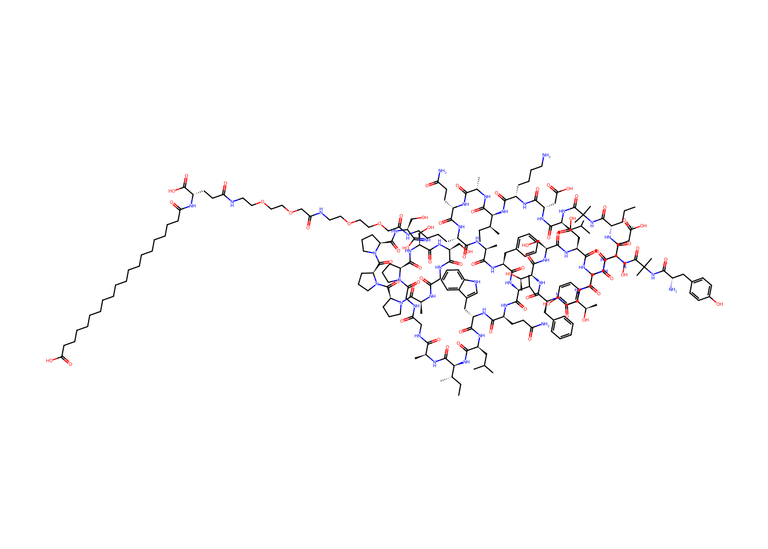
Like other modern injectable incretin peptides, retatrutide is chemically modified with a fatty acid side chain that promotes reversible binding to serum albumin in the bloodstream. This slows the peptide's clearance and is the engineering basis for once-weekly dosing, rather than the multiple-times-daily dosing native GLP-1, GIP, and glucagon peptides would require given their short native half-lives (minutes).
Human Trial Data, in Context
The clinical translation of this mechanism has been tested in a randomized, double-blind, placebo-controlled Phase 2 trial in adults with obesity, published in the New England Journal of Medicine in 2023 (NEJM). The trial's dose-ranging design — testing multiple doses against placebo over 48 weeks — was specifically structured to characterize the dose-response relationship implied by the receptor pharmacology above, and it reported effects on both body weight and several cardiometabolic markers that scaled with dose, consistent with the combined-pathway mechanism the molecule was designed around. Coverage of the same data in endocrinology and diabetes conference reporting also noted signals relevant to glycemic control and liver fat markers in the trial's diabetes and metabolic-liver-disease sub-populations (ADA Meeting News; Healio). Readers interested in the specific trial outcome figures can review them directly in the linked primary source; this article focuses on the receptor biology those outcomes are attributed to.
Where Development Stands
Retatrutide remains an investigational compound. As of this writing it has not received FDA approval for any indication and is not a legally marketed prescription drug in the United States; it continues to move through Eli Lilly's Phase 3 clinical trial program (including the TRIUMPH trial series) evaluating obesity, type 2 diabetes, and related metabolic outcomes. Peptide sold outside of a regulated clinical trial or approved pharmaceutical supply chain is not derived from or verified against the studied clinical formulation.
The Bottom Line
Retatrutide's significance is mechanistic: it's the first agent in late-stage human trials to combine GIP, GLP-1, and glucagon receptor agonism in one molecule, testing whether stacking three complementary — and partly opposing — hormonal pathways produces a genuinely additive metabolic effect. Its Phase 2 outcome data supports that hypothesis, but the underlying question this research program is really answering is about receptor pharmacology and pathway synergy, not just a single trial's numbers.
TL;DR
Retatrutide's whole personality is "why pick one receptor when you can referee three." It hits GLP-1, GIP, and glucagon receptors simultaneously, three pathways that don't even agree with each other, since glucagon receptor activity on its own would work against what the other two are doing, and the engineering bet is that running all three at once nets out to something more coordinated than any single pathway alone. It's fatty-acid-tagged to stick to serum albumin, which is the whole trick behind stretching dosing out instead of chasing the minutes-long half-life its native hormone cousins have. Multi-receptor peptide diplomacy, still investigational, still working its way through trials, still very much a receptor-biology story before it's anything else.
This article is for research and educational purposes only and does not constitute medical advice. Consult a licensed healthcare provider before making decisions related to any compound discussed here.
- Retatrutide
- GIP
- GLP-1
- glucagon receptor
- receptor pharmacology
- obesity research