TB-500 and Thymosin Beta-4: Actin-Sequestering Mechanism at the Cellular Level
Stratosbiolabs Research Team
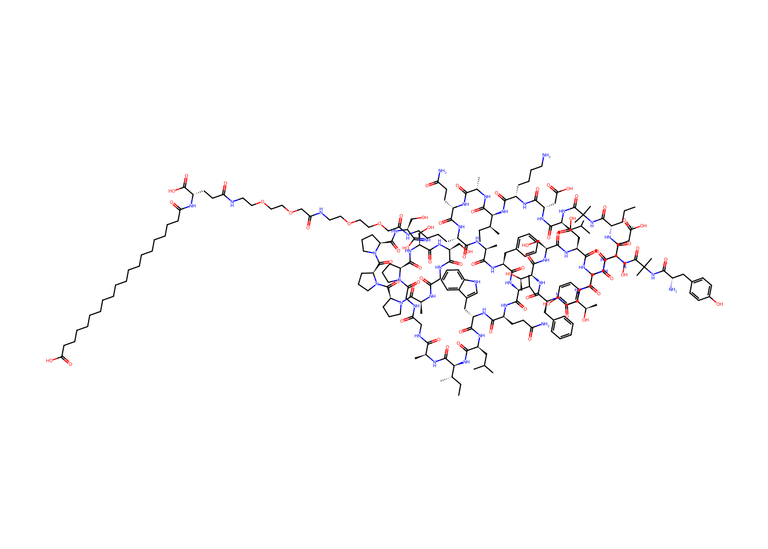
"TB-500" is the commercial research-chemical name associated with Thymosin Beta-4 (Tβ4), a naturally occurring actin-sequestering protein whose mechanism operates at the level of cytoskeletal polymerization dynamics and cell motility signaling.
What Is Thymosin Beta-4 — and What Is "TB-500"?
Thymosin beta-4 (Tβ4) is a small, naturally occurring 43-amino-acid protein expressed throughout most cell types, where it functions as the primary actin-monomer-sequestering protein in the cytoplasm. It is not a receptor-ligand signaling molecule in the classical sense; its mechanism is structural and biochemical, operating directly on the cytoskeletal protein pool rather than through a cell-surface receptor.
"TB-500" is the name commonly used in the commercial research-peptide market for a synthetic peptide marketed as replicating Tβ4's active region. It's worth noting a distinction the scientific literature is precise about but commercial sources often blur: the peer-reviewed mechanistic literature is built around full-length Tβ4 and specific, defined synthetic fragments of it — "TB-500" is not a standardized designation used in peer-reviewed publications, and a given commercial "TB-500" product's identity relative to the sequences studied below is not independently verifiable from labeling alone.
Actin Sequestration: The Core Mechanism
Tβ4's defining biochemical function is binding monomeric globular actin (G-actin) in a 1:1 stoichiometric complex, sequestering it from the polymerization pool. Actin exists in a dynamic equilibrium between monomeric G-actin and filamentous F-actin, and this equilibrium governs cytoskeletal remodeling. By buffering the available G-actin pool, Tβ4 regulates the kinetics of filament assembly and disassembly — the biophysical process underlying cell shape change, membrane protrusion, and directional cell movement.
Downstream Signaling Consequences
The actin-sequestration mechanism has secondary, well-characterized downstream effects at the cellular level: it modulates the activity of actin-nucleating complexes (such as the Arp2/3 complex) at the leading edge of migrating cells, and it interacts with signaling intermediates including PINCH and integrin-linked kinase (ILK) in focal adhesion complexes — the structural assemblies that couple the actin cytoskeleton to extracellular matrix contacts.
Endothelial and Vascular Cell Signaling Studies
A 2022 study using endothelial cells differentiated from induced pluripotent stem cells examined Tβ4's effect on cell-level reparative signaling capacity, reporting improved cytoskeletal-dependent functional metrics in the treated endothelial cell population, consistent with the actin-sequestration mechanism described above translating into measurable cell-migration and vascular-tube-formation assay outcomes (PMC).
Broader Cell Biology Literature
Review literature — including coverage in ScienceDirect Topics' biochemistry reference collection — has mapped Tβ4's actin-sequestration mechanism across a range of cell types and experimental models in the cell and molecular biology literature, consistently returning to the same underlying biochemical mechanism: G-actin buffering and its downstream effects on cytoskeletal polymerization dynamics.
Mechanistic Uncertainty in Commercial Context
As with the actin-sequestration mechanism itself, the cell-biology literature cited above is built around full-length Tβ4 and specific characterized fragments studied in defined experimental systems. Because "TB-500" as sold commercially is not a term used in the peer-reviewed studies cited above, there is an added layer of uncertainty in mapping a specific commercial product's molecular identity to the mechanism described in this literature.
Regulatory Status
Thymosin Beta-4 / TB-500 is not FDA-approved for any use. It is sold as a research chemical.
The Bottom Line
Tβ4's mechanism is a matter of structural cell biology — G-actin sequestration and its downstream effects on cytoskeletal polymerization dynamics — rather than classical receptor-ligand signaling. That mechanism is well characterized in the peer-reviewed literature for defined Tβ4 sequences; the identity of commercially sold "TB-500" relative to those sequences is a separate, unresolved question.
TL;DR
Everyone calls it TB-500, the actual literature calls it Thymosin Beta-4, and the two of you are not, strictly speaking, on a first-name basis with the same molecule. Tβ4 is a 43-amino-acid protein that doesn't bother with receptors at all, it just grabs G-actin monomers directly and manages the buffer between "actin sitting around" and "actin built into filaments," which is the machinery behind cells changing shape and moving. That mechanism is genuinely well-documented for Tβ4 and its specifically defined fragments. "TB-500" isn't a term that shows up in any of those papers, so whatever's in the vial with that name on it is doing its own thing, identity-wise, separate from the science it's borrowing its reputation from. Not FDA-approved, sold as a research chemical, going by an alias its own paperwork won't confirm.
This article is for research and educational purposes only and does not constitute medical advice.
- TB-500
- Thymosin Beta-4
- actin sequestration
- cytoskeletal dynamics
- cell biology